When to Plant Seed Potatoes by Zone
November 20, 2026
Disclosure: This post contains affiliate links. As an Amazon Associate I earn from qualifying purchases. See our disclosure policy for details.
Seed potatoes for planting vs grocery tubers
Seed potatoes for planting are certified tubers produced under an inspection program so the stock is true to type and screened for viruses and late blight. Grocery potatoes are food. Many lots are treated with a sprout inhibitor so they sit in storage without breaking dormancy, which is the opposite of what a seed piece needs to do once it hits cold soil. Grocery tubers can also carry seed-borne disease into a bed you will reuse.
These are not sweet potatoes. Sweet potatoes start from slips in warm ground. Seed potatoes are a cool-season crop. Plant them when soil has reached about 45–50°F. Tubers set while soil stays in the 60s, and the crop stalls when the bed runs hot.
Get the calendar so you stop guessing the window.
Buy certified seed potatoes, not grocery potatoes.
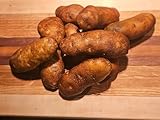
Zones 3–5: 45–50°F soil, weeks before last frost
In Zone 3b, Zone 4a, Zone 4b, Zone 5a, and Zone 5b the planting cue is soil temperature, not the last frost date on the calendar. Put a thermometer at planting depth and wait until the reading holds near 45–50°F and the bed is workable: it crumbles, it does not smear. If the bed is still compacted or waterlogged, prepare the garden soil before you plant. Frozen ground waits.
Time the planting for two to four weeks before the zone’s last frost date. Zone 5b’s last frost date is May 21, so the window often opens in late April. Zone 3b’s last frost date is June 1, so the same soil reading shows up in May. Zone 4a’s last frost date is May 29, Zone 4b’s is May 28, and Zone 5a’s is May 26.
Do not wait until those dates have passed. That timing is for tomatoes. Potato shoots can take a light frost. The point of the early planting is to root in cool soil so tuber set happens before summer heat. Soil that stays below about 40°F in wet spring conditions is where seed pieces rot instead of sprouting, which is why the thermometer reading matters more than the frost date.
Zone 3b has 99 frost-free days. Chitting uses some of those days above ground. Set the tubers in a bright room near 50–60°F for a week or two until short green sprouts show, then plant. Fewer days are spent underground waiting for eyes to break.
Skip a fall crop in this band. Zone 3b’s first frost date is September 8. Zone 5b’s first frost date is September 24. After a summer harvest there are not enough cool days left for a second tuber crop.
Zones 6–7: spring crop, limited fall window
Zone 6a, Zone 6b, Zone 7a, and Zone 7b still plant on soil temperature and on the two-to-four-week mark before last frost. Zone 7b’s last frost date is April 24, so March soil that has reached 45–50°F is in range. Zone 6a’s last frost date is May 17, Zone 6b’s is May 11, and Zone 7a’s is May 6. April is the typical month once the bed is workable.
Spring is the primary planting. Cool soil in April and May is when tubers set; that alignment is the crop. A fall planting is possible only with an early type and only where the first frost date leaves enough cooling soil for a 70-day variety. Zone 7b has 176 frost-free days, and Zone 7b’s first frost date is October 17, which can fit a July planting. Zone 6a has 135 frost-free days, and Zone 6a’s first frost date is September 29, a thin margin: treat that planting as a trial. Zone 6b’s first frost date is October 5. Zone 7a’s first frost date is October 9.
Zones 8–9: late winter and a fall crop
This band is where potatoes become a two-window crop. Zone 8a and Zone 8b each support a late-winter or early-spring planting and a fall planting. Zone 9a and Zone 9b follow the same pattern, shifted earlier in spring and later in fall.
Zone 8a’s last frost date is April 16, and Zone 8a has 190 frost-free days. Zone 8b’s last frost date is April 7, with 205 frost-free days. Count two to four weeks back from those last frost dates, then confirm soil is 45–50°F. That puts the spring planting in March for Zone 8a, and in late February into March for Zone 8b. Zone 9a’s last frost date is March 26. Zone 9b’s last frost date is March 8. February soil at 45–50°F is the spring cue in those two zones.
Take the spring crop out as soil warms in May, before June heat. Replant in the fall as nights cool. Zone 8a’s first frost date is October 23. Zone 8b’s first frost date is October 29. August still leaves weeks of cooling soil. Zone 9a’s first frost date is November 6. Zone 9b’s first frost date is November 22. September plantings still have time to bulk.
Leave June and July empty of potatoes. High soil temperature stalls tuber set even when the vines look healthy.
Zones 10–11: cool-season crop only
Frost is not what limits potatoes in this band. Heat is. Zone 10a’s last frost date is February 16, and Zone 10a’s first frost date is December 10. Zone 10b, Zone 11a, and Zone 11b are frost-free. A calendar that waits for last frost will miss the only months when soil stays cool enough for tubers to set.
Plant in the cool season, November through February. In Zone 10a a February planting can still bulk before late-spring heat. A May planting will grow vines and few tubers. In Zone 11a, where the year is frost-free, November through January is still the planting season because soil temperature, not air frost, sets the crop. Hold the potato beds for another crop through summer.
Russet and Yukon Gold types follow this timing. Days to maturity change with the type; the soil-temperature rule does not.
Month-level seed potato windows
A zone band can give a month. It cannot give your county’s day.
| Climate band | USDA zones | Spring planting | Fall planting |
|---|---|---|---|
| Short season | 3–5 | April–May, soil 45–50°F | None |
| Temperate | 6–7 | March–April | July, early types only |
| Mild winter | 8–9 | February–March | August–September |
| Warm | 10–11 | November–February | Cool season only; no summer |
State extension guides set the day-level windows, and those live on the potatoes plant page. Use that page when you want the date for your county. Use the bands above when you want to know whether you are in a one-window climate or a two-window climate.
Ready to Plan Your Garden?
Use our free planting calendar to find your USDA zone from your zip code, with frost dates and planting windows for 100 vegetables, herbs, and flowers.
Find My ZoneRegional Vegetable Gardening Guides
Want the complete regional strategy? Our 10-book series includes month-by-month planting schedules, companion planting charts, pest management, and 20+ vegetable profiles per book, calibrated to your USDA zone and climate.
Browse All 10 Guides