Zone 5b Seed Starting Dates for Spring
November 27, 2026
Disclosure: This post contains affiliate links. As an Amazon Associate I earn from qualifying purchases. See our disclosure policy for details.
Zone 5b seed starting and the last frost date
Zone 5b seed starting is a week-count from the zone’s last frost date, not a packet day of the month. In Zone 5b, the last spring frost date is May 21. A crop labeled “start 8 weeks before last frost” belongs under lights in late March. One labeled “4 weeks” waits until late April. Write those offsets on the seed box before the first tray is filled, because the indoor calendar is the only part of spring you control while the beds are frozen. The seed-starting guide by zone turns the same count into start dates for Zone 5b and the zones around it.
The zone’s first fall frost date is Sep 24. Zone 5b has 126 frost-free days, which is enough for a tomato to ripen if the plant is already 6–8 weeks old when it goes out, and not enough if you sow that same tomato in the bed in June. Indoor starting exists to spend the frozen weeks on stem and root growth. If you want those week-counts next to variety and spacing notes for Zone 5b gardens, the Northeast vegetable gardening guide follows the same last-frost math crop by crop.
Use soil temperature as the outdoor check, not the air forecast. Peas germinate near 40°F. Beans and cucurbits wait to germinate until the soil holds about 60°F. A warm afternoon in April does not move those numbers. The week-count starts the plants. The soil thermometer decides when they leave the house.
Start indoors 10–12 weeks out
Count 10–12 weeks back from May 21 and you land in late February through mid-March. This slot is for crops that germinate slowly or grow slowly. Brussels sprouts belong here: they need a long vegetative period before they button, and a May transplant from a March sowing still has to finish before Sep 24. Celery sits in this window for the same reason. Onion and leek seed started now make stout transplants by the time the soil can be worked. Onion sets skip this step. Seed-grown storage onions do not.
Celery seed needs light to germinate. Press it onto the mix, do not bury it, and keep the dome on until it sprouts. In Zone 5b that still means a late-February start if you want thick stalks before Sep 24.
Start parsley in this window. It can take three weeks to germinate even at 70°F, so a 10-week indoor start is ordinary. Keep the mix evenly moist and leave the tray in place through day 21.
Flowers that you want in bloom by early summer take this slot too. Impatiens is a 10–12-week indoor start from seed in Zone 5b. Sow it with the brussels sprouts, not with the zinnias. Petunias and geraniums from seed follow the same slow calendar. Bedding packs from a nursery skip it.
Do not crowd this wave. Ten weeks under lights is a long time to hold a seedling, and leggy brassicas in a shallow tray are worse than a later sowing. Use deeper cells for brussels sprouts and onions, and thin to one plant per cell once true leaves show. Nightshades and cucurbits do not belong here. Hold them for the 6–8-week and 4–6-week trays.
Start indoors 6–8 and 4–6 weeks out
The 6–8-week wave is late March into early April in Zone 5b. Tomatoes sit here. Eight weeks gives a stocky plant with the first flower cluster forming. Twelve weeks gives a pot-bound plant that stalls after transplant. Check the plant page for the exact window by type (cherry, slicing, or paste) rather than copying a single March date.
Start peppers and eggplant on the long side of this wave. They want warmer germination, 80°F if you can hold it, and they grow slower than tomatoes after they sprout. Start them at 8 weeks, not 4, or you will set out 3-inch plants next to 10-inch tomatoes. Broccoli, cabbage, and cauliflower can share the 6-week mark. They tolerate cooler indoor temps (60–65°F) and they should not sit in cells until they are root-bound.
The 4–6-week wave is April in Zone 5b: early April at 6 weeks, late April at 4 weeks. This is lettuce, basil, and the cucurbits you start indoors (cucumber, summer squash, melon). Four weeks is plenty. A 6-week cucumber in a 2-inch cell is already circling its roots, and transplant shock in that family costs more days than the head start bought. If you do not have a heat mat and strong light, skip indoor cucurbits and wait for warm soil.
Keep the two waves on separate trays if you can. Tomatoes and peppers want 70°F nights. Brassicas get spindly at those temperatures. A basement at 60°F with a mat under the pepper tray is easier than one thermostat fighting both groups.
What to direct-sow instead
Indoor starting is not a default. In Zone 5b, root crops, cool-soil greens, beans, and corn should never see a tray.
Root crops with a taproot resent transplanting. Carrots, beets, parsnips, radishes, and turnips go in the bed. Sow carrots and beets when the soil is workable and near 45–50°F. Radishes will germinate colder than that. A transplanted carrot forks. A direct-sown carrot does not.
Peas, spinach, and arugula germinate in the 40s. Starting them indoors wastes tray space on crops that outgrow a cell before May 21 and then stall when you move them. Sow peas as soon as the soil can be worked. Sow spinach in the same cold window. You gain nothing by putting those seeds under lights in March.
Beans and corn germinate poorly below 60°F, and they grow so fast after that threshold that a 4-week indoor start is redundant. Direct-sow both after the last frost date, once a soil thermometer reads about 60°F at planting depth. The same rule covers squash and cucumber if you wait for warm soil. The indoor cucurbit tray is a choice, not a requirement.
Potatoes are not a seed-starting crop. Use seed potatoes in the ground, not tomato-style trays. Sunflowers, nasturtiums, and zinnias can be direct-sown after frost. They do not need a 10-week indoor run.
Split the garden this way. If the crop has a taproot, germinates in cold soil, or goes from seed to harvest in under 60 days in warm soil, direct-sow it. If it needs 70-plus days of warmth after transplant and the packet lead time is 6 weeks or more, it earns a tray.
Supplies: mix, tray, and heat
Use a seed starting mix, not garden soil and not a heavy potting mix. Garden soil compacts in a cell and stays wet enough to rot a stem.
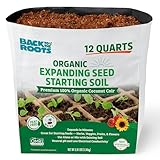
Cells need drainage, a humidity dome for the first few days, and light close to the leaves once they emerge. A south window in Zone 5b in March is not enough light. Seedlings stretch toward it and then flop. Trays with grow lights and a heat mat keep germination in a warm cell while the room stays cooler.

Bottom heat comes off after germination for most crops. Lights stay on 14–16 hours. Water from the bottom so the surface stays drier, and run a small fan for an hour a day so stems thicken. After true leaves appear, seed-starting mix is low in nutrients. Feed with a dilute liquid fertilizer once a week so a 10-week onion does not stall in the cell.
When May 21 is about a week away, stop starting seeds and start hardening off the transplants you have. Set trays outside in shade for a few hours, then add sun and wind over 7–10 days. Warm-season crops (tomatoes, peppers, cucurbits) wait until after the last frost date, and until nights hold above the mid-40s. Cool-season brassicas and onions can go earlier if the soil is workable. Exact transplant windows live on each crop’s plant page. This post stops at the indoor week-count.
Ready to Plan Your Garden?
Use our free planting calendar to find your USDA zone from your zip code, with frost dates and planting windows for 100 vegetables, herbs, and flowers.
Find My ZoneRegional Vegetable Gardening Guides
Want the complete regional strategy? Our 10-book series includes month-by-month planting schedules, companion planting charts, pest management, and 20+ vegetable profiles per book, calibrated to your USDA zone and climate.
Browse All 10 Guides