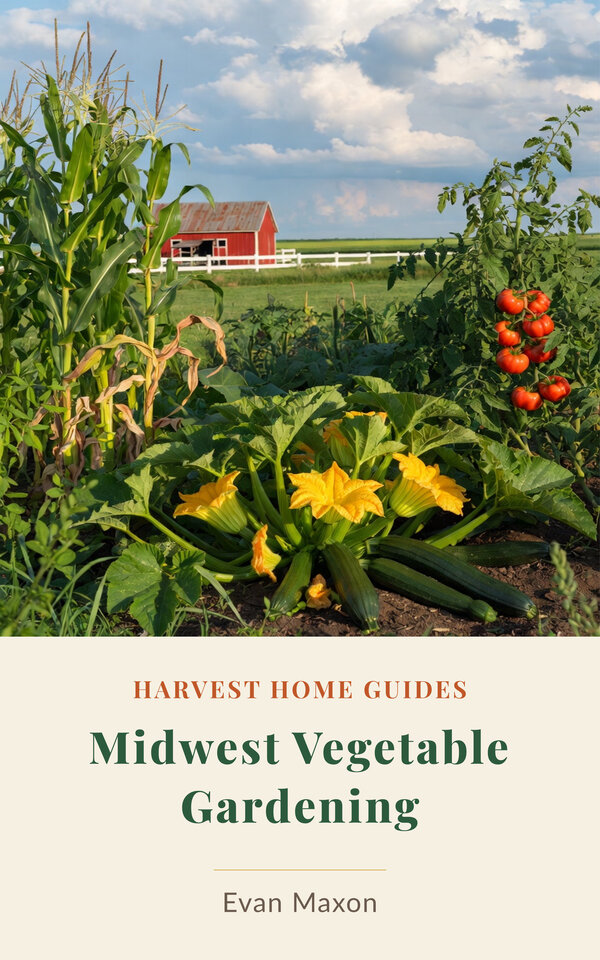
What this guide covers
The Midwest encompasses USDA hardiness zones 3a through 8a across 10 states, with frost-free growing seasons ranging from 99 days in zone 3a to 190 days in southern Missouri. Average last spring frost dates span from Jun 1 in the Northern Midwest to Apr 16 in the Southern Midwest, a gap that determines whether warm-season crops like tomatoes and peppers have adequate time to mature without season-extension infrastructure.
The book contains 22,500 words across these sections:
Month-by-month planting calendars
Three sub-regional schedules (Northern, Central, and Southern Midwest) with indoor seed-starting dates, hardening-off windows, transplant timing, and direct-sow schedules. Each date is computed from the sub-region’s average frost data.
20+ vegetable profiles
Variety recommendations selected for cold hardiness and short-season performance. Each profile specifies days to maturity (critical in zones 3b–4b where the window is tight), soil temperature requirements for germination, and succession-planting intervals.
Regional growing strategies
- Season-extension techniques quantified by zone: row covers add 2–4 weeks in zones 4a–5b; cold frames extend the fall harvest by 4–6 weeks in zones 5a–6b
- Prairie loam and heavy clay soil management with amendment rates and drainage solutions
- First and last frost risk analysis with hardening-off schedules calibrated to each sub-region
- Pest and disease timing tied to soil temperature thresholds (e.g., squash vine borer emergence at 65°F soil temp)
- Container and small-space strategies for urban gardens in Chicago, Minneapolis, Columbus, and Milwaukee
Who this guide is for
Gardeners in Illinois, Indiana, Iowa, Michigan, Minnesota, Missouri, Ohio, Wisconsin, North Dakota, or South Dakota (USDA zones 3a–8a) who need planting schedules and variety recommendations specific to Heartland growing conditions rather than generic national charts.
Format and availability
The guide is organized by Northern, Central, and Southern Midwest sub-regions. Season extension, soil management, and pest timing are each covered in dedicated chapters with zone-specific data for the full 3b–7a range. Available in paperback and Kindle on Amazon.
The guide includes variety recommendations for Heartland growing conditions. Available in paperback and Kindle on Amazon. Not sure which zone you garden in? Enter your ZIP code on the Gardening by Zone home page to look it up.