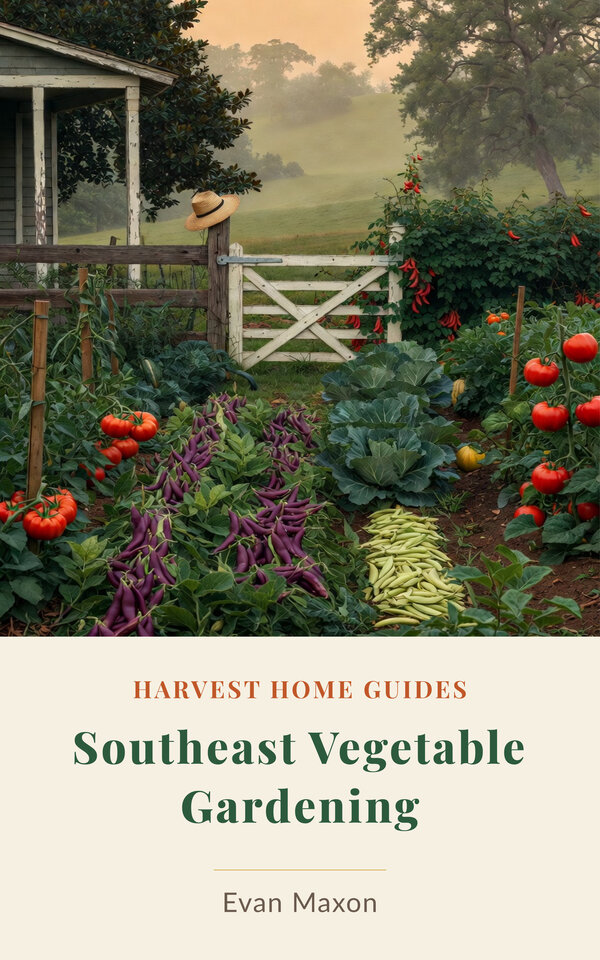
What this guide covers
The Southeast spans USDA hardiness zones 5b through 10a across 11 states, with frost-free growing seasons ranging from 126 days in zone 5b to 297 days in zone 10a. Average last spring frost dates shift across this range (from May 21 in zone 5b to Feb 16 in zone 10a), creating substantially different planting windows between zone 5b and zone 10a.
The book contains 25,100 words across these sections:
Month-by-month planting calendars
Three sub-regional schedules (Upper South, Deep South, Coastal South) with separate timing for the spring warm-season planting, summer maintenance period, and the fall cool-season replanting window that makes Southern gardening uniquely productive.
30+ vegetable profiles
Variety recommendations emphasizing heat tolerance, humidity resistance, and disease performance under sustained temperatures above 90°F with high dew points. Includes Southern staple crops (okra, field peas, collards, sweet potatoes) alongside standard vegetables.
Regional growing strategies
- Dual-season planning with quantified transition windows: when to pull spent spring crops and establish fall plantings by sub-region
- Red clay soil management: amendment rates for breaking compaction, raising organic matter, and improving drainage without overliming
- Humidity-driven disease management with preventive spray schedules and resistant variety selection
- Extended mild-winter harvest techniques for zones 8a–9b (overwintering greens, root crops, garlic)
- Pest identification and timing correlated to Growing Degree Days rather than calendar dates
Who this guide is for
Gardeners in Georgia, North Carolina, South Carolina, Virginia, Alabama, Tennessee, Mississippi, Arkansas, Kentucky, Louisiana, or West Virginia (USDA zones 5b–10a) who want planting calendars and management strategies calibrated to Southern heat, humidity, and soil conditions.
Format and availability
The guide is organized by Upper South, Deep South, and Coastal South sub-regions. Chapters cover red clay management, humidity-driven disease prevention, dual-season planning, and pest timing calibrated to regional Growing Degree Day accumulations. Available in paperback and Kindle on Amazon.
The guide includes variety recommendations for Southern growing conditions. Available in paperback and Kindle on Amazon. Not sure which zone you garden in? Enter your ZIP code on the Gardening by Zone home page to look it up.